
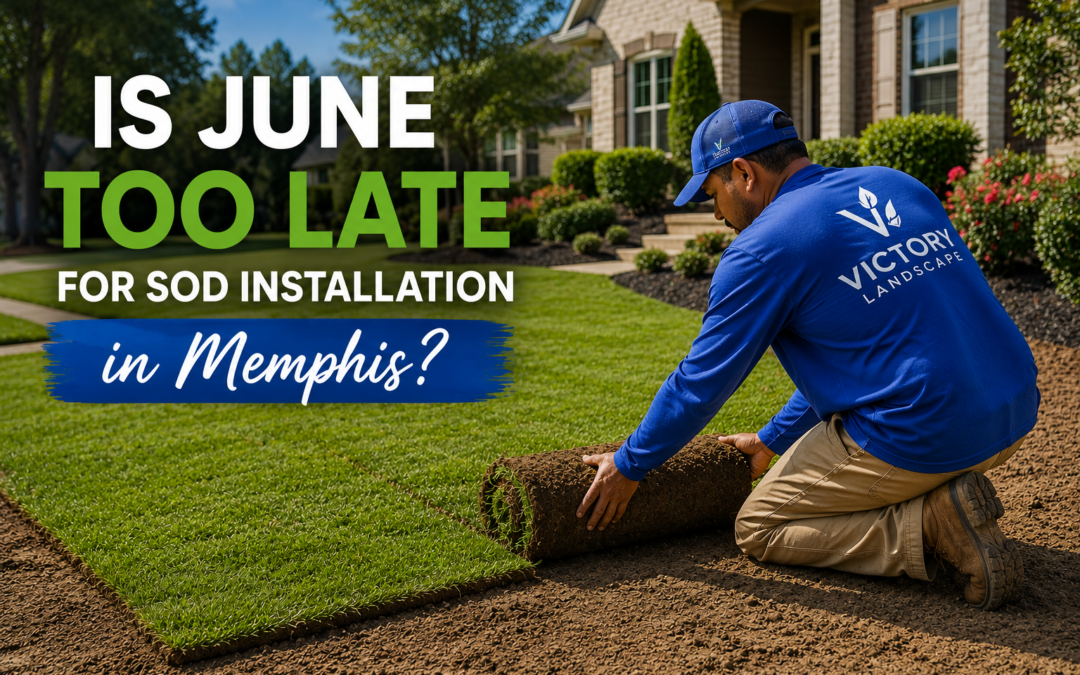
June is when a lot of homeowners in Memphis start noticing what spring growth has been hiding: thin turf, worn-out patches, muddy areas, and sections of grass that never really bounced back. That is also when the question comes up: did I wait too long to install sod?
The honest answer is no. June is not automatically too late for sod installation in Memphis. In many cases, it can still be a smart time to replace an ugly lawn or finish a yard improvement project. The catch is that summer sod has less room for mistakes. Preparation, irrigation, and follow-through matter much more once the heat settles in.
Why Homeowners Ask This Question in June
By June, temperatures are climbing, the sun is stronger, and lawns in Memphis can start showing stress fast. A yard that looked acceptable in April can look patchy, thin, or uneven by early summer. This is especially common for homeowners who want better curb appeal, are preparing for outdoor gatherings, or are finally ready to fix a lawn that has been underperforming for a while.
Sod gives you immediate visual improvement, but summer installation only works well when the property is ready and the watering plan is realistic.
When June Sod Installation Still Makes Sense
The Grass Type Fits the Season
Warm-season grasses commonly used in this region, such as Bermuda and Zoysia, are active during summer. That makes June a workable window for installation when the site is prepared correctly. Instead of struggling to establish during cool weather, these grasses are entering the part of the year when they naturally want to grow.
That does not mean every lawn is automatically a good candidate. Grass choice still needs to match the property’s sun exposure, drainage, traffic, and overall landscape goals.
You Have a Real Watering Plan
New sod in June cannot be treated like an established lawn. It needs consistent moisture while roots begin to knit into the soil below. A rushed install followed by inconsistent watering is one of the fastest ways to turn a promising project into a disappointing one.
Before installation, it helps to answer a few practical questions:
- Can the lawn be watered consistently during the first few weeks?
- Is irrigation coverage even across the yard?
- Will anyone be out of town right after the install?
- Are there hot spots, slopes, or exposed areas that may dry out faster?
If those questions are not addressed up front, June becomes much harder than it needs to be.
The Yard Is Actually Ready for Sod
Good sod results start before the first pallet arrives. Soil prep, rough grading, drainage correction, and debris removal all affect how well the new lawn performs. If the surface is uneven or water is already pooling in low spots, sod may cover the problem for a short time without actually fixing it.
This is one reason homeowners often get better long-term results when sod is part of a broader residential landscaping in Memphis plan rather than a quick cosmetic patch.
When Waiting May Be the Better Move
The Yard Has Shade, Drainage, or Grading Issues
If the lawn struggles because of standing water, compacted soil, heavy shade, or runoff, replacing the grass alone may not solve much. In that situation, it usually makes more sense to correct the site conditions first and then install sod once the foundation is right.
Watering Will Be Inconsistent
June sod is much less forgiving when nobody is available to monitor it. If your schedule is packed, you are traveling, or you know the watering routine will be hit or miss, waiting can protect your investment.
Bigger Landscape Work Still Needs to Happen First
If patios, drainage work, bed reshaping, irrigation improvements, or other exterior upgrades are still on the schedule, it is often smarter to do those first. Installing sod too early can lead to unnecessary rework, torn-up sections, and added cost.
Why Sod Works Best as Part of a Bigger Landscape Plan
The most successful lawns usually are not treated like isolated projects. They are planned alongside grading, irrigation, planting beds, edging, drainage, and traffic flow. That is especially true on larger homes and more visible front-yard spaces where the lawn has to match the rest of the property.
For homeowners investing in curb appeal, outdoor living, or a full-yard refresh, sod often makes the most sense as one phase of a larger project rather than the only step. A clean installation supported by thoughtful design will usually outperform a last-minute surface fix.
What to Do After Sod Is Installed
Once the sod is down, the next few weeks matter. The goal is to help roots move into the soil below while avoiding stress, dry spots, and unnecessary traffic.
- Follow the watering schedule given for your property and current weather conditions.
- Avoid heavy foot traffic until the sod has started rooting in.
- Watch edges, corners, and sloped areas that may dry out faster than the middle of the lawn.
- Do not mow too early or too low.
- Address irrigation coverage problems quickly instead of hoping the lawn will catch up on its own.
After the lawn is established, ongoing lawn care in Memphis becomes important for mowing height, seasonal turf health, and overall appearance. For properties that need broader upkeep beyond the turf alone, a consistent landscape maintenance plan can help protect the investment over time.
So, Is June Too Late for Sod Installation in Memphis?
No. June is not automatically too late. In many cases, it is still a perfectly workable time to install sod in Memphis. The difference is that summer installations need solid prep, the right grass, and a realistic follow-up plan.
If your lawn is thin, patchy, or simply not recovering the way you hoped, June can still be a smart time to move forward. The key is making sure the property is ready before the sod goes down.
FAQ
Is June too hot for new sod in Memphis?
Not necessarily. Warm-season sod can still establish in June, but the heat means watering and site preparation become more important.
Is sod a better option than seed in June?
For many homeowners, yes. Sod gives immediate coverage and a finished look faster than seed. It can be a strong choice when appearance, erosion control, or timing matters.
How long does it take for new sod to root?
Rooting time depends on the grass type, soil conditions, watering consistency, and weather. Early rooting can begin within a couple of weeks, but full establishment takes longer.
Should I replace only the bad spots or redo the whole yard?
That depends on how widespread the damage is. If the lawn has scattered issues, patching may work. If the problems are broad, uneven, or tied to drainage and grading, a full evaluation usually makes more sense.
Need help deciding whether your yard is ready for sod this June? A site-specific evaluation can tell you whether now is the right time to install, whether prep work is needed first, and how to set the lawn up for long-term success.