
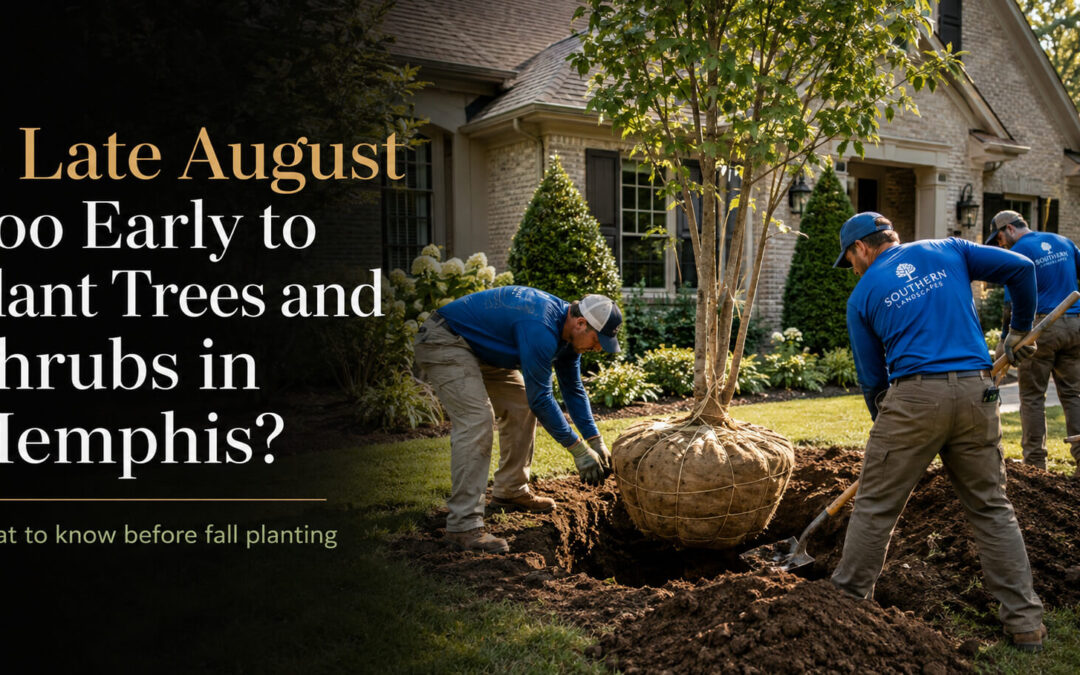
By the second half of August, Memphis landscapes have been through months of heat, humidity, thunderstorms, and dry stretches. At the same time, homeowners are beginning to think about projects they want finished before fall gatherings, cooler weather, and the end of the growing season.
One question starts coming up around this time every year: Is late August too early to plant trees and shrubs in Memphis?
The short answer is no. Late August is an excellent time to begin planning a tree or shrub installation, and depending on the plant, property, weather, and available irrigation, planting may be possible now. However, many Memphis homeowners may benefit from using late August to prepare the property and completing the installation as temperatures begin to moderate in fall.
When Is the Best Time to Plant Trees and Shrubs in Memphis?
There is not one planting date that works for every tree and shrub, but fall can be an excellent planting season in Tennessee.
University of Tennessee Extension notes that fall planting can benefit trees and shrubs because roots have an opportunity to grow and develop before the heat and stress of the following summer.
That makes the transition from late August into fall especially important for homeowners considering a larger landscaping project in Memphis.
Instead of waiting until October to start making decisions, August is a good time to evaluate the site, choose plants, address irrigation or drainage problems, finalize the design, and prepare for installation.
Can You Plant Trees in Memphis in Late August?
Yes, trees can be planted during late summer under the right conditions. The challenge is not simply the date on the calendar. The bigger issue is the stress caused by hot weather and inconsistent moisture.
A newly installed tree has a limited root system compared with an established tree. That means it cannot pull moisture from a large area of soil yet. Hot afternoons, dry soil, and inconsistent watering can put unnecessary stress on the plant while it is trying to establish.
If a tree is going into the ground during hot weather, having a dependable watering plan becomes extremely important. Before planting, it is worth making sure your irrigation system is covering the landscape properly.
If irrigation coverage is poor or the property cannot be watered consistently, waiting for cooler conditions may be the smarter decision.
Why Fall Planting Can Work So Well in Memphis
Fall planting offers an important advantage: the plant can focus more energy on establishing roots without dealing with the same level of summer heat stress.
The soil also remains relatively warm after air temperatures begin cooling. This can create favorable conditions for root development even as above-ground growth begins slowing.
For a homeowner, that can mean installing trees and shrubs during a period when they have time to settle into the landscape before facing another Memphis summer.
That does not mean every plant should automatically be installed in fall. Plant variety, maturity, sun exposure, drainage, soil conditions, and irrigation all matter. A good landscape plan considers all of those factors instead of choosing plants based only on appearance.
What Should You Check Before Planting a Tree or Shrub?
1. How Much Sun Does the Area Receive?
A plant that looks perfect at the nursery may perform poorly if it is installed in the wrong location.
Before choosing a tree or shrub, pay attention to how many hours of direct sun the area receives and whether that sun occurs in the morning or during the hottest part of the afternoon.
Late August is actually a useful time to evaluate sun exposure because the summer canopy is fully developed and problem areas are easy to see.
2. What Will the Plant Look Like at Maturity?
One of the easiest landscaping mistakes to make is designing around the size of a plant on installation day instead of its mature size.
A tree planted too close to a house, driveway, walkway, fence, or another tree can eventually create maintenance and spacing problems. Shrubs planted too tightly may look full immediately but become overcrowded as they mature.
Professional residential landscape design in Memphis should account for how the property will look several years from now—not just the day the installation is completed.
3. Does the Area Drain Properly?
Watering a new plant is important. Planting it in an area that constantly holds water is a different problem entirely.
If rainwater regularly sits in the location, if downspouts discharge into the bed, or if the property has an obvious low spot, drainage should be considered before new plants are installed.
Putting a new tree into a problem area without addressing the underlying conditions can turn an expensive plant into a short-term fix.
4. Is Irrigation Reaching the Root Zone?
Do not assume that because an irrigation zone is running, every plant within that zone is receiving enough water.
Sprinkler heads can be blocked by shrubs, spray patterns can miss newly expanded beds, and some areas can receive significantly more or less water than others.
Run the irrigation system and physically watch the coverage before new landscaping goes in. Fixing irrigation beforehand is much easier than trying to redesign coverage around freshly installed plants.
How Should a Balled-and-Burlapped Tree Be Planted?
Larger landscape trees are often sold as balled-and-burlapped trees, commonly called B&B trees. The root system is dug with a large soil ball, wrapped in burlap, and often supported by a wire basket.
Installation depth is extremely important. A tree should not simply be dropped into an oversized deep hole and covered with soil.
The planting hole should generally be wider than the root ball without unnecessarily burying the tree deeper. The root flare—the area where the trunk begins widening into the root system—should remain near the proper finished grade.
After the B&B root ball has been positioned, ropes or twine around the trunk should be removed, the upper burlap should be pulled back, and the upper portion of the wire basket should be addressed appropriately before the planting is finished.
Backfilling, watering, and proper mulch placement are also part of the installation process. Mulch helps conserve soil moisture and moderate soil temperature, but it should not be piled against the trunk.
Should You Plant Now or Wait Until Fall?
Planting in late August may make sense when:
- The irrigation system is working correctly.
- The property can be watered consistently after installation.
- The plant is appropriate for the site and season.
- Drainage and grading are already correct.
- No major construction will disturb the planting area afterward.
Waiting for cooler fall conditions may make more sense when:
- Consistent watering will be difficult.
- The site is experiencing extreme heat or unusually dry conditions.
- Drainage or grading still needs to be corrected.
- A patio, retaining wall, irrigation system, or other construction needs to happen first.
- The landscape design has not been finalized.
Do the Landscaping Work in the Right Order
This is one of the biggest reasons to start planning in August.
If a property needs drainage work, irrigation changes, grading, a walkway, retaining wall, lighting, or new planting beds, there is usually a logical order in which those improvements should happen.
Installing trees first and then bringing equipment back through the same area for another project can damage turf, compact soil, disturb roots, and create unnecessary rework.
A complete plan allows everything to work together. You can view examples of landscape installations and outdoor projects completed by Victory to see how planting, hardscape, turf, and other elements can be incorporated into the same property.
Late August Is the Time to Start Planning Fall Landscaping
If you have been thinking about adding trees, replacing outdated shrubs, redesigning planting beds, improving curb appeal, or completing a larger landscape renovation, you do not need to wait until leaves begin falling to start the process.
Late August gives you time to determine what the property actually needs, choose appropriate plants, solve irrigation or drainage problems, and get the project scheduled for the right planting window.
Victory Landscape Services provides landscape design and installation throughout Memphis, East Memphis, Germantown, Collierville, and surrounding communities. You can view our Memphis-area landscaping service areas to see where our team works.
Frequently Asked Questions About Fall Planting in Memphis
Is August too hot to plant a tree in Memphis?
Not automatically. Trees can be installed during warm weather when the species, site conditions, and watering plan are appropriate. However, late-summer heat increases the importance of consistent moisture, and waiting for cooler fall weather can reduce stress in many situations.
Is fall a good time to plant shrubs in Tennessee?
Yes, fall can be an excellent planting period for many trees and shrubs in Tennessee. Cooler temperatures can reduce transplant stress while roots continue becoming established.
Should irrigation be installed before landscaping?
When major irrigation changes are needed, it is usually easier to make those changes before or as part of a new landscape installation. This prevents unnecessary disturbance to newly planted areas and helps ensure the new plants receive proper coverage.
How soon should I start planning a fall landscape project?
Late summer is a great time to begin. Starting in August gives you time to evaluate the property, develop the design, select materials and plants, address site problems, and schedule the installation instead of rushing after cooler weather arrives.
Planning a Fall Landscape Project in Memphis?
If you are considering new trees, shrubs, planting beds, irrigation improvements, or a larger landscape renovation, now is a good time to start developing the plan.
Victory Landscape Services can evaluate your property, discuss your goals, and help determine the right timing for installation.