When comparing commercial landscape maintenance bids in Memphis, start with the scope, service schedule, and exclusions before comparing the monthly price. Two proposals can look similar while covering different work. Property managers should confirm which areas receive service, how seasonal tasks are handled, who approves extra charges, and how problems are reported. A useful proposal should make it clear what you are buying and how you will evaluate the contractor’s performance.
Whether you manage a medical office in Germantown, an office property in East Memphis, or a commercial campus in Collierville, the goal is straightforward: dependable grounds care with clear expectations and fewer issues requiring your attention.
Commercial lawn care or full landscape maintenance?
Start by deciding what the property needs. A mowing proposal may cover cutting turf, trimming around obstacles, edging, and blowing clippings from adjacent hard surfaces. A broader landscape maintenance plan may also address planting beds, shrubs, leaves, irrigation inspections, and seasonal improvements.
Neither description tells you exactly what is included. Ask each company to identify the recurring work and the services priced separately.
Victory Landscape Services provides commercial landscape maintenance in Memphis, including recurring grounds care, bed maintenance, shrub care, seasonal cleanups, and irrigation support. The written proposal should establish the specific services selected for your property.
Compare commercial landscape maintenance bids using the same scope
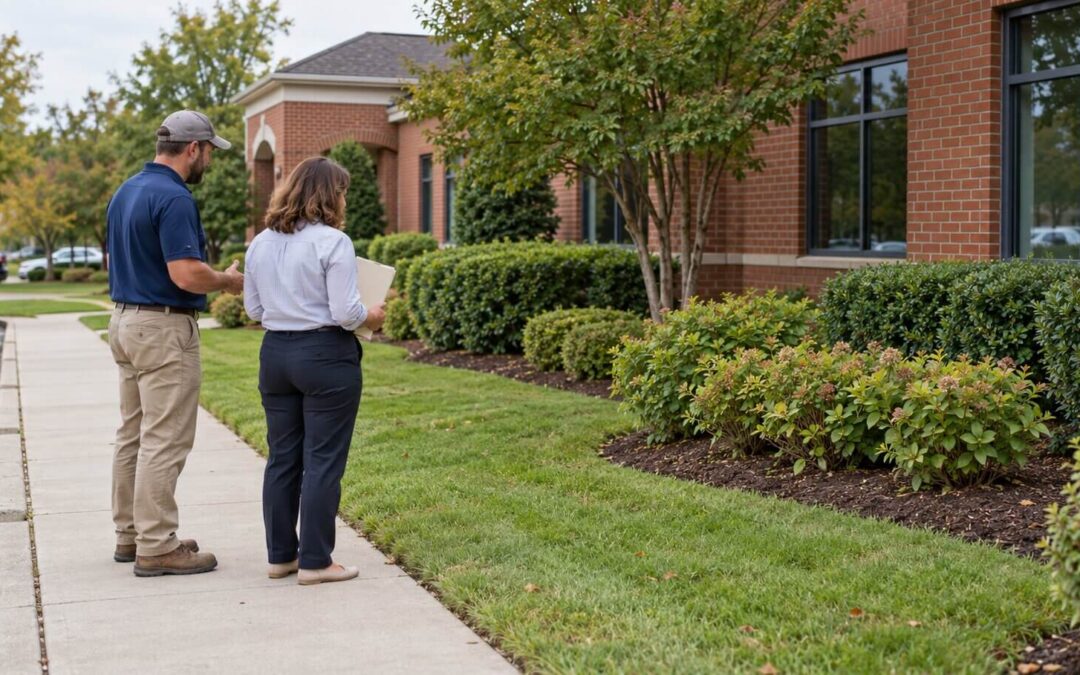
Give each bidder the same property boundaries, priorities, and requested services. Include parking islands, frontage, signage beds, rear service areas, and any separate parcels. A marked aerial image can help prevent one contractor from pricing areas another contractor has excluded.
Use this checklist when reviewing proposals:
| Service area | What to clarify |
|---|---|
| Mowing and detailing | Areas covered, visit frequency, edging, trimming, and cleanup of clippings. |
| Landscape beds | Weed management, bed edging, debris removal, and whether mulch is included. |
| Shrubs and ornamental plants | Plants covered, pruning scope, timing, and exclusions for larger work. |
| Leaf services | Areas covered, number or frequency of visits, and mulching versus collection and hauling. |
| Irrigation | Inspection frequency, controller adjustments, repair approval, and separate charges. |
| Seasonal improvements | Mulch, flowers, plant replacement, and restoration work included or quoted separately. |
| Reporting and billing | Service records, issue reporting, property identification, and authorization for additional work. |
An exclusion is not automatically a problem. An unclear exclusion is. Separate pricing can make the budget easier to manage when everyone understands which work requires approval.
Check the service calendar, not just the monthly payment
Ask for the proposed schedule by season. “Year-round maintenance” does not explain how often the crew will visit or what it will do outside the mowing season.
Weekly mowing and service every 14 days are different scopes. Likewise, a winter visit for litter and bed cleanup is different from a full leaf collection. Compare the number and purpose of visits rather than assuming every visit delivers the same work.
Clarify how weather delays are communicated and rescheduled. For an occupied office or medical property, discuss parking access, busy entrance areas, and any restrictions on equipment use near tenants or patients.
October is a useful time to review these details before winter work begins. If your agreement renews at year-end, it also gives you time to arrange site visits and compare next year’s scope. Follow your actual renewal schedule rather than assuming every property operates on the same calendar.
Make leaf service specific before the main season
In the Memphis area, the main leaf season often comes later in fall. An October proposal should explain how that work will be handled, even if the property has little leaf accumulation when the contractor visits.
Ask whether the price covers turf areas only or also includes beds, parking islands, sidewalks, and entrances. Confirm whether leaves will be mulched on site, collected, or hauled away, and how repeat visits are priced.
For heavily wooded properties, one final cleanup and recurring leaf service are different purchasing decisions. Describe the presentation you need between visits. Victory’s leaf removal services can be discussed alongside the recurring maintenance scope.
Separate irrigation inspections from repair spending
A proposal that includes irrigation checks does not necessarily include repair labor, replacement parts, or system modifications. Ask what the inspection involves, how findings are documented, and who can authorize the next step.
The EPA’s irrigation maintenance guidance identifies leaks, damaged heads, and sprinklers spraying hard surfaces as issues worth checking. A defined inspection and reporting process helps put those observations in front of the person responsible for the property.
Victory offers irrigation inspections and repairs. When requesting a maintenance bid, identify whether you want those services included, separately priced, or coordinated with an existing irrigation vendor.
Compare the annual scope and expected total cost
A monthly payment is only one part of the comparison. Confirm the agreement term, number of payments, and whether billing is a fixed installment or based on completed services.
Then account for the work you expect to purchase outside the base agreement. A proposal excluding mulch, leaf hauling, or irrigation inspections should not be compared directly with one that includes those items.
Keep three categories separate:
- Recurring maintenance: the services included in the base agreement.
- Planned seasonal work: items you expect to purchase during the year.
- Unplanned repairs and improvements: work requiring a separate decision and approval.
Ask for clarification where quantities are missing. “Fresh mulch” is less useful for comparison than a proposal identifying the beds, material, preparation, and quantity or coverage being priced.
Evaluate communication before selecting a contractor
When comparing commercial landscaping companies in Memphis, ask how the relationship will work after the first service. Who receives a missed-service report? Who handles a damaged sprinkler or a concern from a tenant? What information will accompany a recommendation for extra work?
For multiple properties, request a price and scope for each address, even if the contractor also provides a portfolio total. Ask whether invoices and service records can follow your property names, purchase-order requirements, and approval process.
Request references from comparable properties and the insurance documentation required by your organization’s vendor process. A relevant reference can help you evaluate communication, consistency, and follow-through beyond the appearance of a proposal.
Request a commercial maintenance proposal from Victory
Victory Landscape Services works with property managers and owners of office, medical, retail, and other commercial properties throughout the Memphis area. Our process starts with reviewing the property and defining the work it needs.
To begin the conversation, provide:
- The property address or list of locations.
- Your current scope or a list of requested services.
- The concerns you want the new maintenance plan to address.
- Your preferred start date and proposal deadline.
- Any site-access, reporting, billing, or vendor requirements.
Request a commercial landscape maintenance estimate to discuss a plan for your property.