
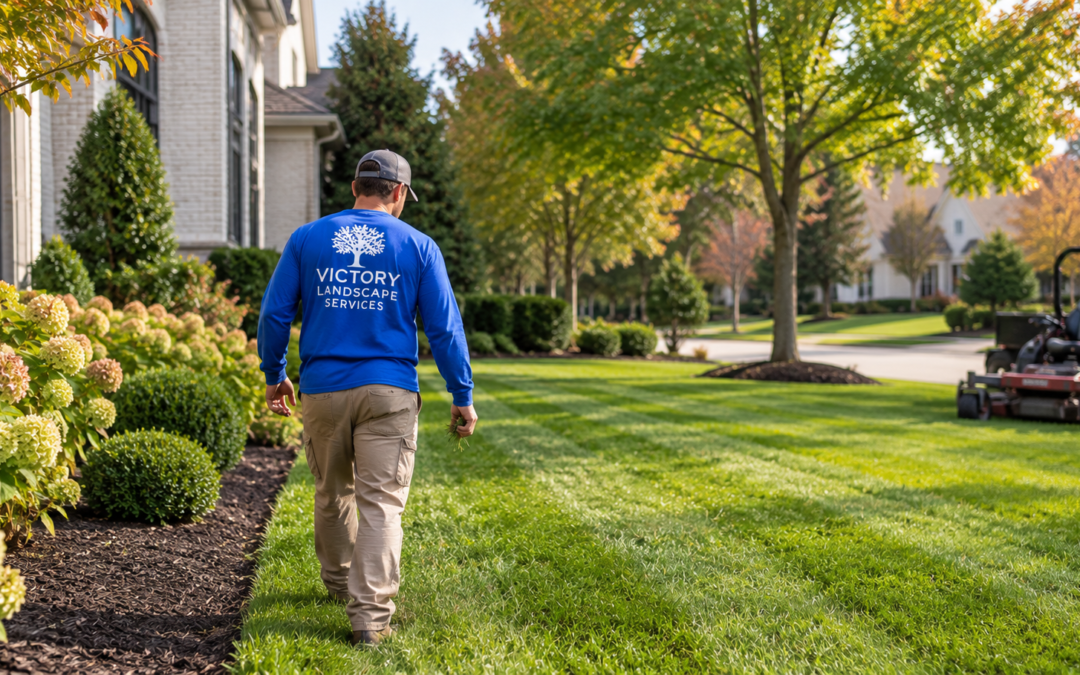
September can be one of the most confusing months of the year for lawn care in Memphis.
It still feels like summer. Bermuda and Zoysia lawns may still be green and growing. At the same time, homeowners with fescue are beginning one of the most important periods of the year for repairing thin turf and preparing for cooler weather.
So what should you actually be doing to your lawn in September?
The answer depends heavily on what type of grass you have. A fescue lawn and a Bermuda or Zoysia lawn should not receive the same treatment simply because they are growing on properties a few streets apart.
Here is what Memphis homeowners should know as summer begins transitioning into fall.
First: Know What Type of Grass You Have
Before fertilizing, seeding, aerating, or changing your watering schedule, determine whether your lawn is primarily a cool-season grass or a warm-season grass.
In the Memphis area, the most common lawn grasses include:
- Tall fescue – a cool-season grass that performs best during spring and fall.
- Bermuda grass – a warm-season grass that thrives during hot, sunny Memphis summers.
- Zoysia grass – another warm-season grass commonly used throughout the Mid-South.
Tennessee sits in what turf professionals call the transition zone. That means our climate can support both warm-season and cool-season turf, but each type experiences stress during different parts of the year.
This is why a September lawn-care recommendation that is perfect for your neighbor’s fescue lawn could be completely wrong for your Bermuda lawn.
September Is an Important Month for Fescue Lawns in Memphis
If you have a fescue lawn that looks thin after summer, September is one of the most important months on the calendar.
Memphis summers are difficult on fescue. Heat, humidity, disease pressure, shade competition, foot traffic, and inconsistent moisture can leave areas thin or bare by the end of August.
Unlike Bermuda, fescue does not aggressively spread across damaged areas using runners. When sections disappear during summer, they often need new seed to fill back in.
University of Tennessee Extension identifies late August through approximately mid-September as a preferred period for establishing fescue from seed.
That makes early September a valuable window for homeowners who want a fuller fescue lawn going into fall.
Should You Aerate Before Overseeding Fescue?
In many situations, yes.
Core aeration removes small plugs of soil from the lawn. This helps relieve compaction and, importantly when overseeding, can improve contact between the new seed and the soil.
Simply throwing grass seed over a dense lawn does not guarantee good results. Seed performs much better when it can make contact with soil instead of sitting on top of thick turf, debris, or thatch.
UT Extension’s fescue management recommendations specifically identify September as a preferred period for aeration, particularly when seed will also be applied.
If your soil is heavily compacted, especially in high-traffic areas, correcting the underlying condition can be just as important as putting down more seed.
Do Not Apply Fall Pre-Emergent Without Thinking About Seeding
This is an easy September mistake.
Fall is an important period for preventing certain cool-season weeds, so homeowners often hear that they should apply a pre-emergent herbicide around this time.
But if you are planning to seed fescue, you need to be careful.
Many pre-emergent herbicides work by interfering with the development of newly germinating plants. That can include the grass seed you are trying to establish.
Do not automatically apply a pre-emergent to an area you plan to seed. Check the specific product label and make sure the lawn-care strategy accounts for the new turf you are trying to establish.
The order of operations matters.
What Should You Do With Bermuda and Zoysia in September?
Bermuda and Zoysia are different.
These grasses love summer. As daylight shortens and temperatures eventually cool, their growth begins slowing and they prepare for winter dormancy.
Early September is not the time to suddenly treat a healthy warm-season lawn like a fescue lawn.
For Bermuda and Zoysia homeowners, September is primarily about finishing the growing season well.
That means:
- Continue mowing while the grass is actively growing.
- Keep mower blades sharp.
- Avoid suddenly scalping the lawn.
- Continue monitoring rainfall and irrigation.
- Address obvious drainage or irrigation problems.
- Begin thinking about fall weed prevention where appropriate.
- Avoid pushing excessive new growth late into the season.
Should You Fertilize Bermuda or Zoysia in September?
Early September is generally toward the end of the normal fertilization season for warm-season turf in the Memphis area—not the beginning of another aggressive growth cycle.
Memphis-area horticultural guidance has traditionally placed the final warm-season feeding around Labor Day when needed.
That does not mean every lawn automatically needs fertilizer on September 1.
Soil conditions, previous fertilizer applications, turf health, grass variety, and nutrient levels all matter. Applying more nitrogen simply because the calendar says September can encourage unnecessary growth as the lawn moves closer to dormancy.
If there is uncertainty about what the lawn actually needs, a soil test is much more useful than guessing.
Should You Keep Watering Your Lawn in September?
Yes—if the lawn actually needs water.
One of the biggest mistakes homeowners make is assuming September means irrigation season is finished.
Memphis can still experience hot, dry stretches well into September. A healthy lawn, recently planted landscape, or newly seeded fescue area may still need supplemental water when rainfall is insufficient.
The better approach is to pay attention to actual conditions instead of leaving the irrigation controller on the same midsummer schedule indefinitely.
If part of your lawn stays dry while another section is soaked, the problem may not be the amount of time your system runs. It may be the system itself.
Broken sprinkler heads, poor coverage, clogged nozzles, leaking valves, and incorrect spray patterns can all create inconsistent results.
Victory provides irrigation installation and irrigation repair in Memphis for homeowners dealing with those types of issues.
Do Not Assume Every Brown Area Needs More Water
A brown lawn does not automatically mean a dry lawn.
Too much water can create problems too.
Standing water, compacted soil, poor drainage, disease, shade, mowing stress, root problems, and irrigation issues can all cause turf to struggle.
If your lawn has remained brown or thin throughout the summer, review our guide explaining why grass turns brown in Memphis before assuming the solution is simply more watering.
The goal should be to identify the cause before spending money treating the symptom.
Should You Lower Your Mower in September?
Not dramatically.
The arrival of September does not mean your lawn should suddenly be cut extremely short.
Continue following one of the most important mowing rules: avoid removing more than roughly one-third of the grass blade during a single mowing whenever possible.
Taking too much leaf tissue away at once can stress the turf and make an already difficult transition harder.
As growth begins slowing later in the season, mowing frequency will naturally decrease. Let the growth of the grass determine the schedule rather than mowing simply because a certain number of days have passed.
For homeowners who prefer to have the property maintained consistently, Victory offers residential lawn care services in Memphis including recurring mowing and annual maintenance options.
September Is Also a Good Time to Look at Drainage Problems
Summer storms often reveal parts of a property that do not drain correctly.
If water repeatedly pools in the same area, runs across the lawn, washes mulch out of beds, or collects near a patio or foundation, putting down seed or sod without correcting the water problem may only cover it temporarily.
The same is true for low areas that stay muddy long after the rest of the property has dried.
If your lawn struggled all summer because of drainage or grading problems, September is a good time to evaluate those conditions before investing in another round of turf.
A broader residential landscaping plan can address the lawn, drainage, irrigation, planting beds, and outdoor living areas together instead of treating each issue as an unrelated project.
Is September Too Late to Install Sod in Memphis?
This one requires more caution.
Warm-season sod such as Bermuda and Zoysia establishes most aggressively when the grass is actively growing and soil temperatures are warm.
By September, the amount of favorable establishment time remaining before cooler weather is becoming shorter.
That does not mean every September sod installation is impossible, but timing, weather, grass variety, irrigation, and site conditions become much more important.
If the lawn needs significant grading, drainage correction, irrigation work, or construction first, rushing sod installation solely to get it completed before fall may not be the best decision.
For more information about how timing affects installation, read our guide: Is June Too Late for Sod Installation in Memphis?
You can also learn more about Victory’s sod and turf installation services.
What About Trees, Shrubs, and Landscape Beds?
Your lawn is not the only part of the property that benefits from a September plan.
As Memphis moves toward cooler fall conditions, homeowners often begin planning new trees, shrubs, redesigned landscape beds, and larger outdoor improvements.
If landscaping is part of your fall plan, it makes sense to determine the construction order before planting anything.
Irrigation changes, drainage work, grading, patios, walkways, retaining walls, lighting, and other construction may need to happen before new plant material goes into the ground.
We recently covered that topic in more detail in our guide to the best time to plant trees and shrubs in Memphis.
A Simple September Lawn Checklist for Memphis Homeowners
If you want the short version, here is what to look at this month:
If You Have Fescue:
- Evaluate thin and bare areas after summer.
- Consider overseeding during the early-September establishment window.
- Core aerate when soil compaction or poor seed-to-soil contact is an issue.
- Be careful with pre-emergent products if you intend to seed.
- Keep newly seeded areas consistently moist during establishment.
- Continue mowing appropriately as new and existing grass grows.
If You Have Bermuda or Zoysia:
- Continue mowing while active growth continues.
- Do not scalp the lawn simply because fall is approaching.
- Monitor irrigation and rainfall.
- Treat early September as the end of the normal summer fertility window rather than the start of a new one.
- Begin planning appropriate fall weed prevention if you are not seeding the area.
- Address drainage, grading, or irrigation problems before winter.
Frequently Asked Questions About September Lawn Care in Memphis
Is September a good time to overseed fescue in Memphis?
Yes. Early September is one of the preferred periods for establishing fescue in Tennessee. Cooler conditions are approaching, while the new grass still has time to germinate and establish before winter.
Should I aerate my fescue lawn before overseeding?
Core aeration can be especially helpful when the soil is compacted or when better seed-to-soil contact is needed. September is a preferred time for aerating fescue lawns when overseeding is part of the plan.
Should I fertilize Bermuda grass in September?
Early September is near the end of the normal warm-season fertilization window in the Memphis area. Do not assume more fertilizer is automatically better. Consider previous applications, turf condition, grass type, and soil-test results before applying additional nutrients.
Should I stop watering my lawn in September?
No. Watering needs should be based on rainfall, temperature, soil conditions, and grass type rather than the month alone. Memphis can still experience hot and dry weather during September.
Can I put down fall pre-emergent and overseed fescue at the same time?
Be careful. Many pre-emergent products can interfere with new grass establishment. Always check the product label and make sure your weed-control plan is compatible with any areas you intend to seed.
Is September a good time for landscaping in Memphis?
Yes. September is an excellent month to begin or continue planning fall landscape improvements, including planting beds, trees, shrubs, irrigation corrections, drainage work, and larger residential landscape projects.
September Is a Transition Month—Use It Wisely
September lawn care in Memphis is less about doing everything and more about doing the right things for the type of lawn you have.
For fescue, this is an important establishment and recovery period.
For Bermuda and Zoysia, it is time to finish the growing season properly and avoid unnecessary late-season stress.
For the rest of the landscape, September is an opportunity to correct irrigation and drainage problems, evaluate areas that struggled during summer, and begin planning improvements for fall.
The work you do now can have a major impact on how the property performs through fall, winter, and next spring.
Need Help With Your Lawn or Landscape This Fall?
Victory Landscape Services works with homeowners throughout Memphis, Germantown, Collierville, East Memphis, and surrounding communities.
Whether your property needs recurring lawn maintenance, irrigation repairs, sod, drainage improvements, or a larger landscape renovation, our team can help determine what should be addressed now and what should be planned for later in the season.